Precision metal manufacturing works best when every step supports the next one. A drawing alone is not enough to create dependable parts. Materials, tolerances, production methods, quality checks, finishing, packaging, and delivery timing all need to line up early.
At Banner Metals Group Inc., we support metal component programs through stamping, CNC machining, fabrication, coatings, deburring, dimensional inspection, and related production services. When you understand what happens at each stage, you can prepare clearer requirements and help prevent surprises as your program moves toward production.
A successful program begins with a full view of what the part needs to do. We look beyond one operation because precision metal manufacturing is a connected process. The shape of a part may affect the material choice, while the finish requirement may affect handling, inspection, and packaging later.
Before production planning begins, it helps to gather the details that guide the work:
Clear information gives our team a better starting point for planning stamping, machining, fabrication, or a combination of services. It also gives your engineering and purchasing teams a clearer picture of how the part can move from concept to repeatable production.
For aerospace, automotive, EV, solar, defense, and industrial applications, small details can have a large effect on fit and function. Early communication helps us identify questions before they become production delays.
Design review is where we study the drawing, material specifications, tolerances, expected volumes, and functional needs. This conversation is not about changing a part simply for the sake of changing it. It is about finding practical ways to produce the intended component consistently while respecting the features that matter most to its performance.
Certain design details deserve careful attention. Sharp corners, tight bends, hole placement near formed areas, thin walls, and highly controlled dimensions can all affect how a part is made. When we see a feature that may create unnecessary difficulty, we can discuss options that support repeatability, material use, and dependable production without losing the part’s purpose.
Material selection matters just as much. Steel, aluminum, stainless steel, copper, and other metals each bring different properties to a project. Your choice may depend on strength, corrosion resistance, conductivity, weight, appearance, or the demands of the finished application. The selected material should also work well with the planned manufacturing process.
Documentation keeps everyone aligned. Sharing inspection criteria, surface finish expectations, packaging details, and release schedules early gives us a stronger foundation for engineering, tooling, production planning, and long-term supply support.
Once the design is approved, the focus turns to building a repeatable plan. We determine how the part geometry, material, tolerance requirements, and production volume can work together in a practical process.
Some components are well suited to metal stamping because they need repeatable forms across higher volumes. Others need CNC machining for detailed features, while fabrication may be appropriate for formed parts or more complex assemblies. In many programs, combining processes is the most practical way to produce the finished component.
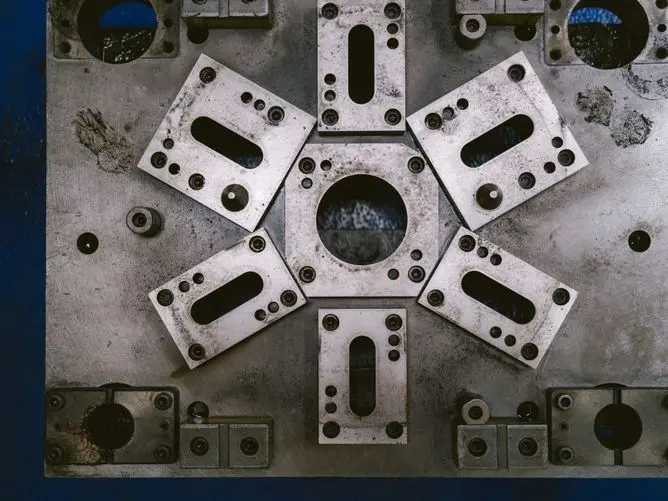
Tooling, fixtures, and workholding play a major role in consistency. Proper tools help control part placement, support efficient handling, and keep critical features in the intended position. For stamped components, dies help produce reliable part geometry from run to run.
Before a full release, we may use prototypes or validation runs to confirm the production approach. This stage can include first-article review, measurement of key dimensions, and assembly-fit checks. Giving these steps enough time helps you verify part performance before production needs increase.
Validated work is only the beginning. Precision metal manufacturing depends on steady control throughout production, from receiving material through the final operation. We coordinate workflows so each service supports the next one and so customers with complex requirements have fewer unnecessary handoffs to manage.
Metal stamping can create repeatable formed shapes efficiently. CNC machining can add precise details where they are needed. Fabrication can support formed or assembled components, while deburring and coatings can prepare parts for handling, appearance, or the next stage of use. Bringing these operations together helps keep the full production path organized.
Consistency comes from following established work instructions, monitoring critical features, maintaining equipment, and managing material flow. In demanding applications, even a small change can affect assembly fit, function, safety, or downstream work. Stable processes help protect the part requirements that matter to you.
Production also needs room to respond. Volume changes, schedule shifts, engineering revisions, and updated customer requirements can happen during an active program. We communicate about the potential effect of changes and work with you to keep the program moving. Repeatability does not mean being rigid; it means having an organized process that can adapt with care.
The final steps are part of the manufacturing process, not an afterthought. A component still needs to arrive ready for your next operation, with the correct finish, acceptable dimensions, and protection for storage and transit.
Depending on the application, parts may need deburring, coatings, cleaning, finishing, or other post-production work. These services can support safer handling, corrosion resistance, appearance, and assembly readiness. When finish requirements are shared early, we can build them into the overall production plan rather than treating them as a late addition.
Dimensional inspection confirms that completed parts meet the required specifications. Inspection may focus on critical dimensions, fit-related measurements, surface conditions, and customer-defined acceptance criteria. Clear quality expectations help us align on what an acceptable finished part should look like.
Packaging and delivery coordination deserve the same attention. Sensitive finishes and precision features need appropriate protection during storage and transportation. As year-end planning approaches, it is smart to review inventory needs, planned shutdowns, and upcoming demand so production and delivery schedules can be coordinated with fewer interruptions.
Reliable metal components come from careful coordination, starting with design review and material selection and continuing through tooling, production, finishing, inspection, and shipment. Bringing requirements forward early gives everyone a clearer path and reduces the chance of avoidable revisions later.
The most useful preparation is simple: keep drawings current, define critical tolerances, identify material and finish needs, and communicate expected volumes and delivery timing. With those details in place, your program is better positioned for steady, repeatable production.
Banner Metals Group Inc. provides precision metal manufacturing support tailored to the requirements of your production program. Our team can help evaluate specifications, processes, and lead-time needs before production begins. To discuss an upcoming project, contact us today.